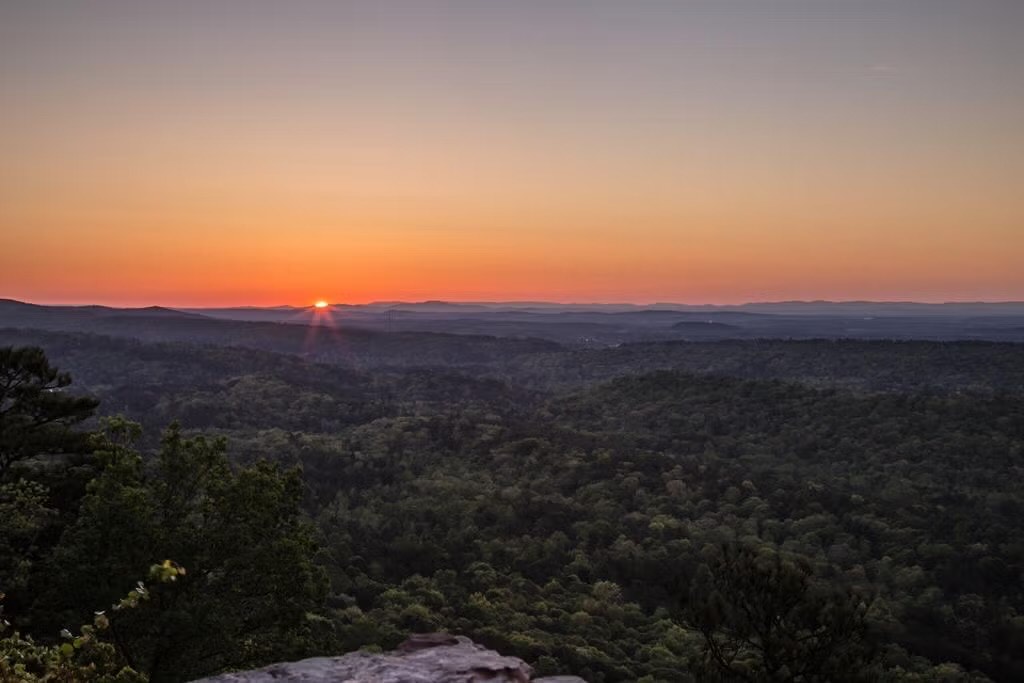
In November 2024, my grandmother died after a lengthy battle with dementia. We were a close-knit pair, woven in part by the threads of writing: our communication via e-mail, instant messaging, and letters, our mutual fervor for reading, and our love of authoring our own pieces. After the recent one-year anniversary of her passing (and challenges from my wife and therapist to write despite my insistent protests), I began writing again. What I’ve learned about grief felt like a good first post.
Allow me, then, to describe two unrelated stories and connect them later:
My grandmother’s passing was no surprise. I believed that over five years of witnessing her decline would better prepare me for the inevitable. That was not the case. The remaining portion of 2024 and the early 2025 months feel hazy. I remember little about what I did or how I survived.
In March 2025, my father and I took a trip to Oak Mountain State Park outside of Birmingham, Alabama. Our phrase of the day was, “Who the fuck thought this was a good idea?”
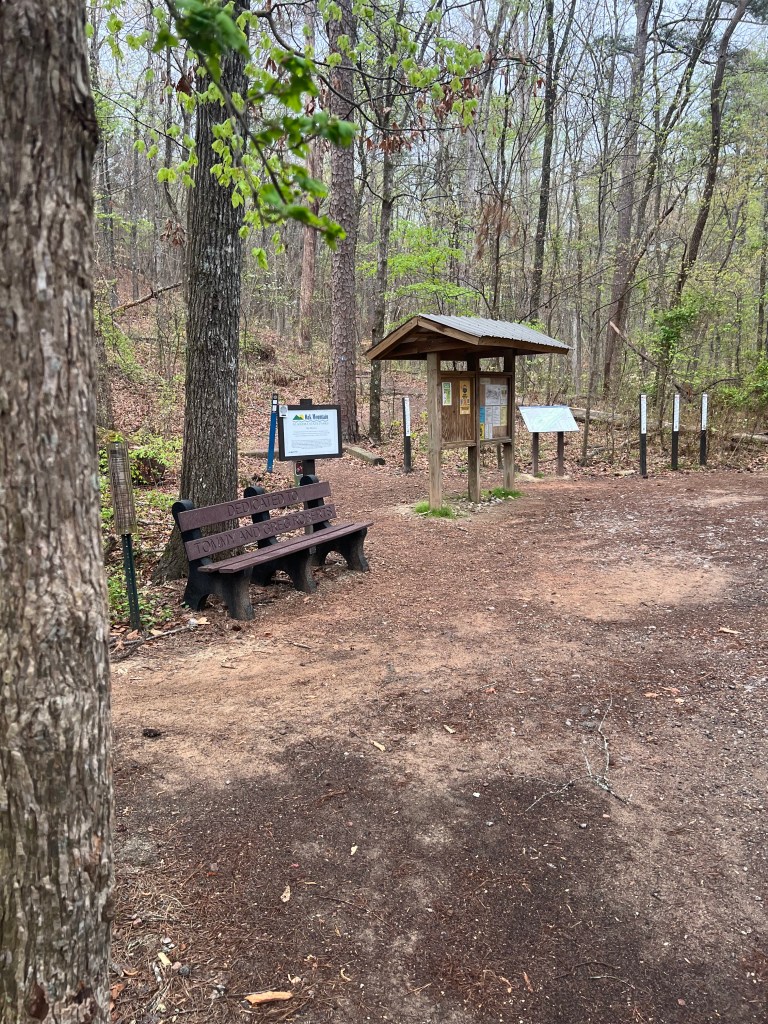
Context: We were both interested in completing a Mammoth March. Mammoth March is an organization that hosts dozens of hikes across the United States each year with the goal of participants completing 20 miles in eight hours. We could not attend the 20-mile hike closest to us in January 2025 and agreed Birmingham (scheduled for April 2025) was within reasonable driving distance and that it would make a good father-son trip. Unbeknownst to us, most people consider the Oak Mountain Mammoth March to be the most difficult in the series thanks to the infamous Blue Trail, a seven-mile stretch in the middle of the hike. My dad is in pretty good shape; me, not so much. We had hiked together for months, and testing the trail beforehand (we thought) would assist our preparation. In a sense, it did: it prepared us to cancel our plans for the event.
We ended the day with almost 14 miles logged, 2,700 calories burned, 28,000 steps, an elevation change of almost 900 feet, and a time elapsed close to 6.5 hours. (Side note: My Apple Watch assigned this trek an effort level of 7 out of 10. How the hell do you earn a 10?)
This information is pertinent to one specific memory from that day I wish to share prior to my reflections. Shortly after we started our hike, my dad and I stared up a hill that was far steeper than anything found in the flatlands of Florida. The unspoken regret of this embarkation was palpable, although we were both too proud to admit it. So we began: we trudged up that hill, muddy from that morning’s drizzle, seeking any root or rock that we could use as a foothold, pouring sweat, huffing breaths, each cursing the other and wondering if we had half a mind between us. After about 30 minutes, we reached a plateau and paused for respite. I was damn proud and certain we’d made considerable progress. I glanced at my Apple Watch for the statistics and discovered we’d gone a whopping quarter-of-a-mile. “You’re shitting me,” I thought. We hadn’t completed two percent of the trail.
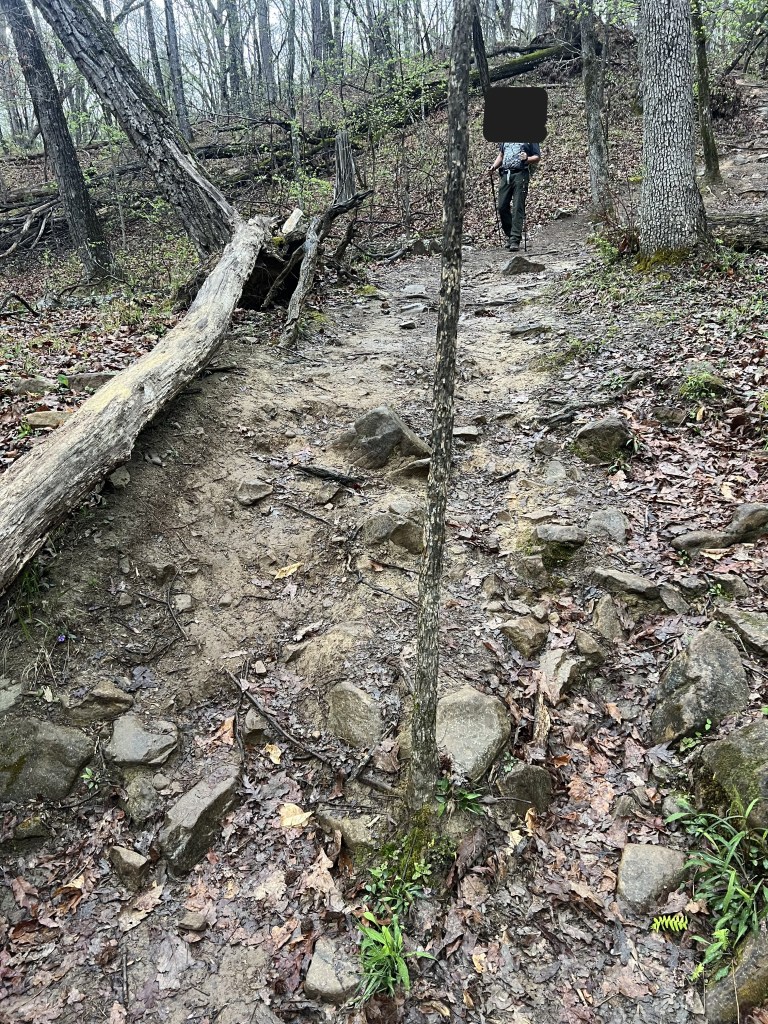
Ultimately, we completed what we set out to do, rewarded ourselves with a steak dinner, and swore off any Alabama State Parks for the rest of our lives. Eight months later, on the one-year anniversary of my grandma’s passing, the analogy presented itself: Grief is a great, gradual mountain, and it’s a challenging climb.
Loss (and Life after) is difficult
Our preparation for Mammoth March included hiking on primarily flat beginner and intermediate trails around the northeast Florida area. It wasn’t all a breeze: there were a couple of falls, injury scares, a few hills, cruddy days because of weather, and poor attitudes (usually mine). Like everyday life, it’s not too bad; sometimes you have better moments than others, but overall, you find contentment in its consistency and reliability.
Grief changes that.
As mentioned, I recall little of my first few months of grief. I know I cried a lot. My wife, God bless her, supported me in small but significant ways: She listened to all my pained reminiscing, held me while I cried and dried my tears, never said no to something she knew would bring me comfort, and helped with menial tasks that are easy to forego when grieving: eating, showering, and getting out of the house (if even to a grocery store), to name a few.
You might see the parallel I am drawing: the stark contrast of life before and after loss is comparable to the sharp increase in difficulty between traversing flat ground and a mountain. Even though my grandmother had no memory of me the last time I saw her, I took comfort in knowing she was still here, as if I were a ship in a raging storm but held by a strong anchor. On the day she died, the rope to that anchor snapped, and the relentless waves of pain thrashed and rocked the boat, and I drifted to a new world, one apart from that sense of security.
As the God-forsaken Blue Trail was the most strenuous hike of my life, this past year after losing my grandmother was the most difficult. Is it getting easier? I think so, but
Progress can be illusory
Dismay is a strong term and not one I use often. However, I felt it as I stared at my watch in disbelief at the top of that first hill. What do you mean I still have over 13.5 miles to go? I was certain we had walked at least half a mile, if not more. The muscles in my legs (some newly identified only because of my pain) agreed. Silly as it may seem, it surprised me that walking 30 minutes on level ground resulted in a greater amount of distance than walking 30 minutes up a slope, something that I’d known in theory but never in practice.
To my broader point: Progress can be illusory. Weeks of hiking a mile-and-a-half or more in 30 minutes led me to believe that hiking for 30 minutes would always result in a mile-and-a-half of distance traveled, but I failed to account for potential variables (in this case, a giant ass mountain).
Consider the five stages of grief: denial, anger, bargaining, depression, and acceptance. From a hypothetical, linear viewpoint, it would be reasonable to think I’d have reached acceptance within one year. In some regards, I have. However, we know these stages are nonlinear. Some days, I accept my loss and am grateful for the time I had with my grandmother and the wonderful memories and feelings that thinking of her still provides. Then there are days I consider the many things I would willingly and gladly sacrifice for the knowledge my grandmother remembered me before she passed away (bargaining). Yet on other days, I am angry at the injustice that someone who served dementia patients in her career could receive the same fate. Shouldn’t that have earned her an exemption?
In the few weeks since the anniversary, I experienced each of these stages, some multiple times. It was frustrating to find myself in days-long depressive episodes as the date came nearer. “I guess I thought it would be easier by now,” I said to my wife through tears one evening. Here lies the illusion: it is. I experience more moments of acceptance now than I did one year ago. I still cry sometimes, but I smile more than I did. Sometimes I feel lost; other times, I remember her calming nature and can almost hear her telling me it will be okay. I miss her terribly, but I am thankful she is at peace. If you’re in the throes of grief, remember that healing unfolds at its own pace. It is okay to feel a range of emotions within a week or day or even moments. Cycling through the grief stages and varying emotions does not equal regression. Eventually, you will reach a point in life where the stages become occasional. It may not happen as quickly as you’d like, but
You can be proud, anyway
As I look back at the day when we hiked the Blue Trail, I’m proud that I completed it. Sure, some can hike that trail effortlessly. Heck, some people run marathons in a couple of hours. I’m not one of them, and I’m okay with that. I was beaming with pride at what I accomplished, which is relative only to my standard. In a few short months, I went from no physical activity to trekking a challenging trail.
Grief is similar.
It might feel like forever until you find acceptance. Perhaps others around you experienced the same loss you did and seem to handle it differently. There’s nothing wrong with that. Grief is unique and individual.
But when you have moments of healing, however infrequent—the smiles, the moments of engagement with your community, positive emotions—be proud of yourself. Pat yourself on the back. You’re doing it.
Writing this section is the hardest because I’m not the best at this. Doing 14 out of 15 things on my to-do list puts me in a funk because I didn’t finish the fifteenth. As I write this, my wife is on the couch nearby, sick, and I will discount the many kind things I’ve done to take care of her this week because I’ve been a little snippy today. I will hike up a mountain and think I could’ve done it quicker. My perspective on that is changing, though. I am the person who hiked up a hard mountain, literally and figuratively. It was challenging; I felt unsure of my progress, but I am damn proud of it. You can be too.
If you’re experiencing grief and would like to connect, feel free to reach out. You are not alone.
In loving memory of AKM.
 Rarely Robert
Leave a comment